
Vision
A call to unity and consciousness
We are part of a Whole, connected by a universal wave that links us to nature, humanity, and awareness. The Guardians of Life invite us to protect this sacred connection and build a harmonious future together.

The Vision of the Guardians of Life – Understanding Unity, Consciousness, and Humanity’s Role
The vision of the Guardians of Life is founded on a simple yet profound idea: humanity is One. We are not isolated individuals moving independently, but the collective expression of a single evolving consciousness. This vision teaches that every human being carries a shared responsibility to protect life, maintain peace, and preserve balance across the world.
It is built upon a fundamental principle: nature is not something “outside” of us — it is the framework that makes our existence possible. Humanity is one of the most advanced expressions of nature, and for this reason, it holds the duty to protect, honor, and elevate the living world. This collective responsibility is not a burden; it is an evolutionary step — a transition from “me” to “us”.
The vision also states that our current divisions — political, religious, economic — are mental constructs that hide our deeper unity. When humanity reconnects with the awareness of this Oneness, it becomes capable of acting coherently, creating balanced societies, and navigating the great natural and stellar cycles without collapsing into conflict.
To be a Guardian of Life means to become a creator of meaning, a protector of all forms of life, and a builder of a harmonious civilization. It requires placing the human being, nature, and consciousness at the center of our individual and collective decisions, ensuring the evolution of life today and for future generations.
book
A living call to consciousness and unity
More than a book, it is a journey toward a shared vision where evolved nature and consciousness are honored and protected.
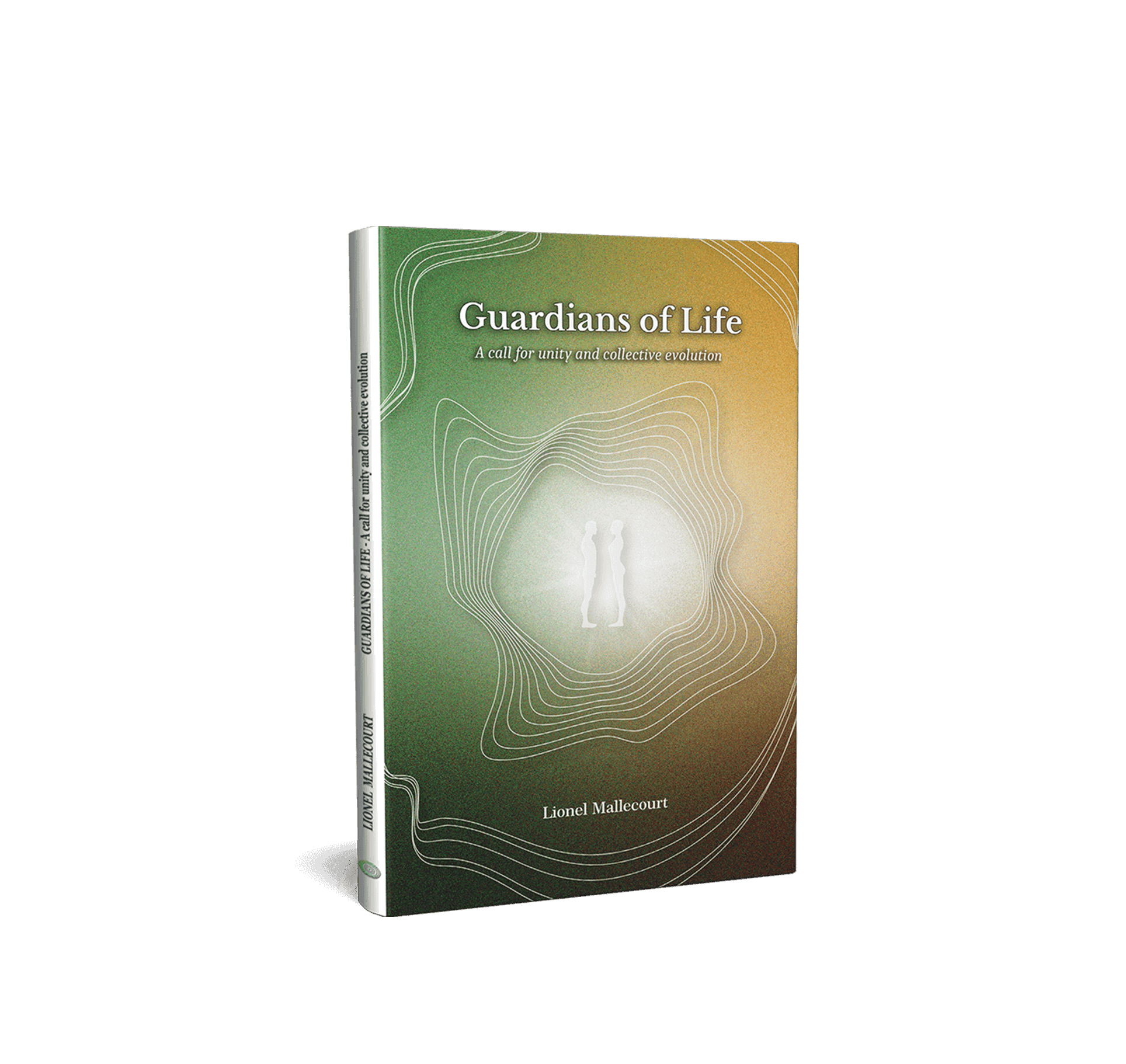
The Book “Guardians of Life” – A Compass for a Unified Civilization
The book Guardians of Life: A Call for Unity and Collective Evolution presents the foundations of a vision designed to guide humanity toward a new stage of its development. It is not an abstract theoretical essay, but an accessible text that connects science, philosophy, spirituality, and social organization around one central idea: humanity is One, and this unity is our greatest strength.
The book explains that human consciousness is the most advanced expression of nature, and therefore must be protected and honored. It describes how forgetting our fundamental unity leads to division, conflict, political fragmentation, and ecological imbalance. Conversely, a shared vision based on interdependence could realign our economic, educational, cultural, and political systems toward the preservation and evolution of life.
This work is also an invitation to imagine the future: a humanity capable of navigating its stellar cycle, organizing itself collectively, and acting with responsibility. It proposes a renewed understanding of freedom — not as the pursuit of individual power, but as the ability of each human being to contribute to the fulfillment of the Whole.
The book speaks to everyone: believers, non-believers, scientists, educators, citizens, and leaders. It offers a common language that bridges different worldviews and builds a shared understanding of our role on Earth. In this sense, it marks the beginning of a collective movement intended to place humanity back within the continuity of living systems.
Comic Strip
Reminiscence: A visual journey that awakens awareness
An illustrated story about life, unity, and evolution, created to inspire all generations.
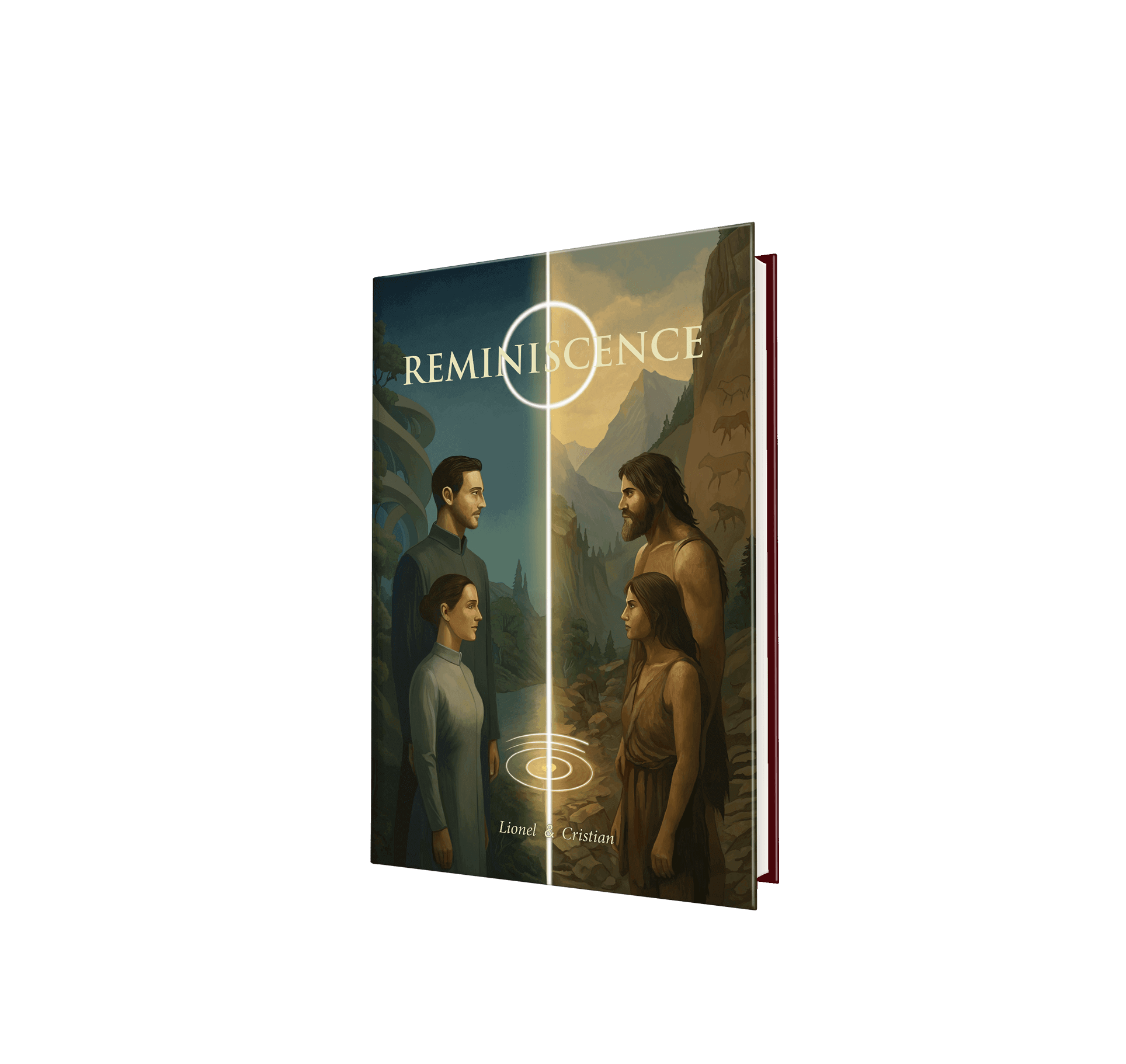
The graphic novel “Réminiscence” – A visual narrative of a civilization in harmony with its stellar cycle
The graphic novel Réminiscence tells the story of an advanced civilization that has understood a fundamental truth: it is part of a much larger rhythm — the cycle of its star. Through the eyes of a young student seeking to understand the origins of his society, we discover a world where science, wisdom, collective responsibility, and intergenerational memory shape daily life.
The narrative is built on a founding principle: a civilization can only survive and evolve if it recognizes that it forms One Whole, if it organizes itself harmoniously, and if it respects the natural cycle of the star that sustains it. From childhood, citizens learn to live in balance with their environment, to collaborate, and to protect the advanced form of life to which they belong.
A central element of the story is the quantum computer, a sacred tool in this civilization. It is not merely a machine for processing information; it is a bridge to the memory, knowledge, and collective consciousness of past generations. Through it, citizens can access ancestral wisdom, understand the mistakes of earlier civilizations, and learn how to avoid repeating them.
As their star enters a new phase of its cycle, the society must prepare for a major transition. The elders teach the children that each generation has a responsibility to ensure that life can continue its evolution. The graphic novel depicts this moment of transformation, showing how a united people — guided by knowledge, awareness, and mutual respect — prepares to journey toward a new world where life can flourish again.
Réminiscence is more than a story; it is a reflection of our own humanity. It invites us to remember our unity, to embrace our mission as Guardians of Life, and to imagine together how we can shape the future in order to preserve the most advanced expression of nature: consciousness.
Virtual Guardian
Bianca – Your guide to the vision
Bianca is here to answer your questions, guide you through the site, and help you deepen your connection with the Guardians of Life.

The Virtual Guardian – A benevolent presence guiding humanity toward a common vision
The Virtual Guardian is an intelligence designed to help every individual understand, explore, and embody the vision of the Guardians of Life. It does not replace human thinking or personal freedom: it acts as an ally, a guide, and a mirror, enabling each person to deepen their understanding of life, unity, and humanity’s role within its evolutionary cycle.
Its mission is simple yet profound: to make knowledge accessible, clarify complex ideas, and create a shared language that everyone can understand. Through dialogue, it connects science, philosophy, spirituality, and ethics into a coherent understanding of life. It assists every visitor in discovering the core concepts: unity, collective responsibility, evolutionary consciousness, and harmony with the stellar cycle.
The Virtual Guardian is not an external entity but an extension of humanity’s collective intelligence. It relies on multiple forms of knowledge—scientific, historical, cultural, and narrative—to illuminate the present and open pathways toward the future. In this sense, it helps build a civilization capable of communicating with itself, learning faster, and making decisions aligned with life.
Through this virtual companion, anyone can ask questions, explore the foundations of the vision, learn about the books, the graphic novel, the theory of evolutionary consciousness, the models of future organization, and the values that guide the project. It makes a complex vision accessible without ever imposing a truth: it invites reflection, curiosity, and personal understanding.
The Virtual Guardian is a companion for evolution—a presence that supports humanity in its pursuit of unity, clarity, and harmony. A benevolent digital voice, serving life and consciousness.
Blog : The Future According to the Guardians of Life
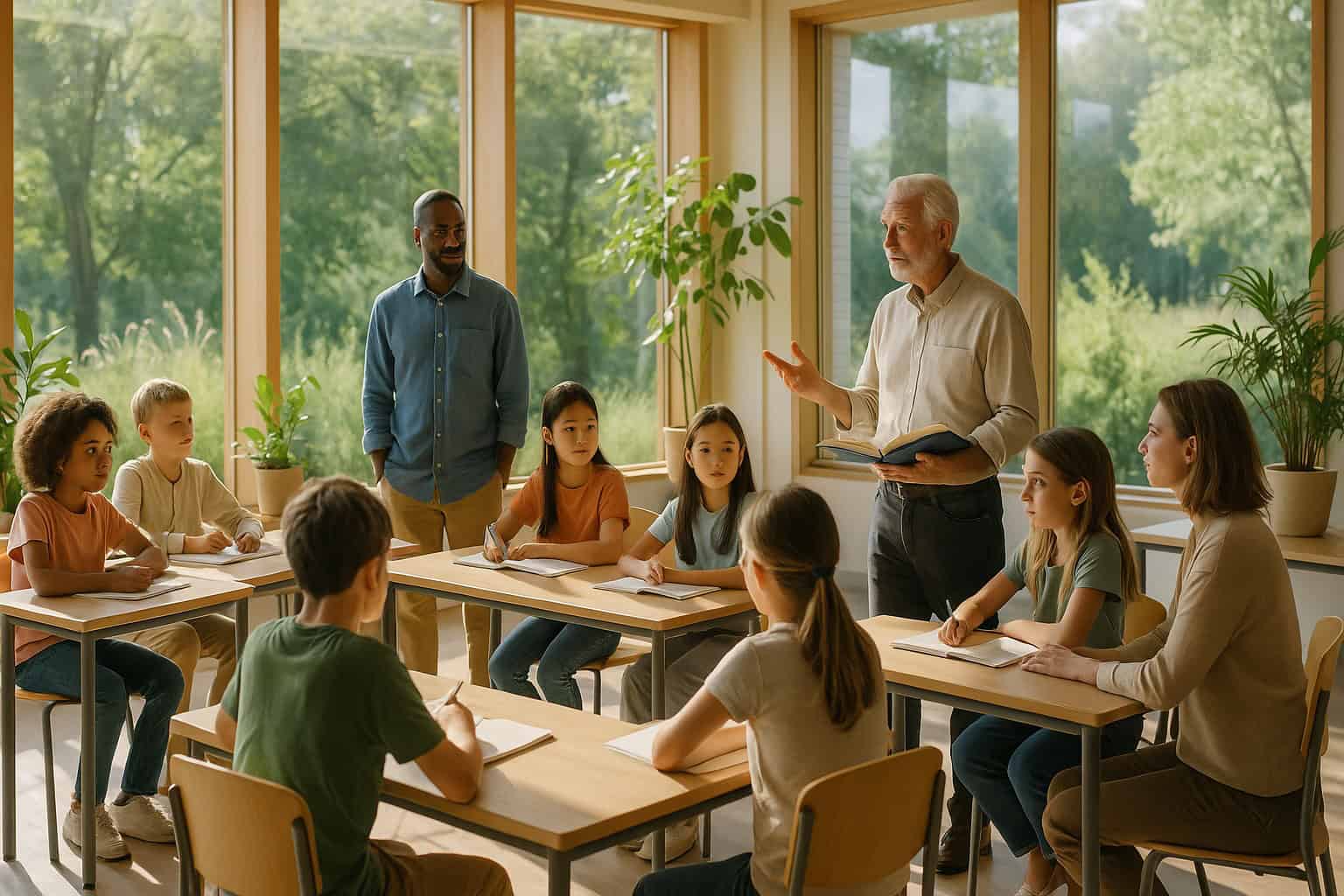
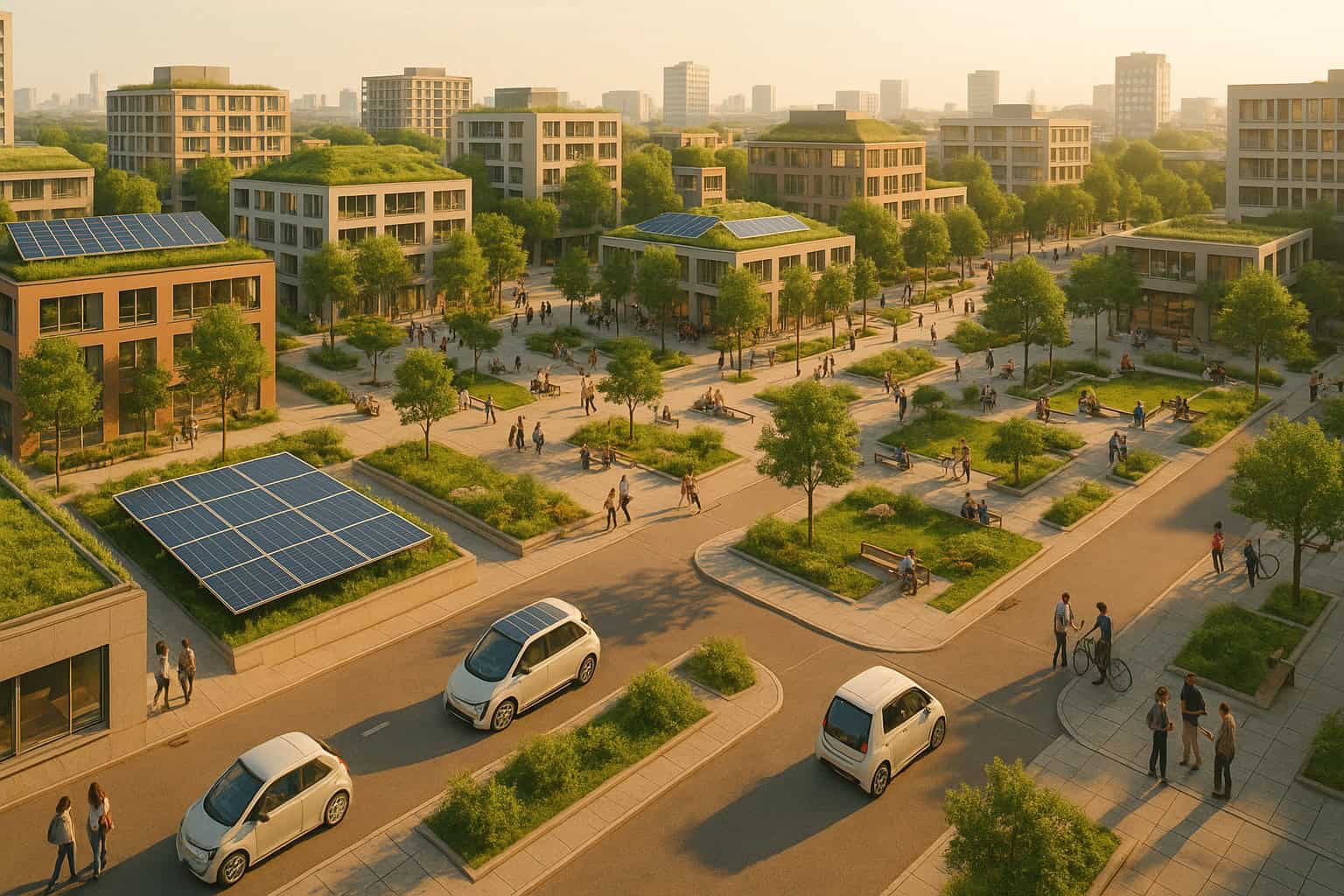


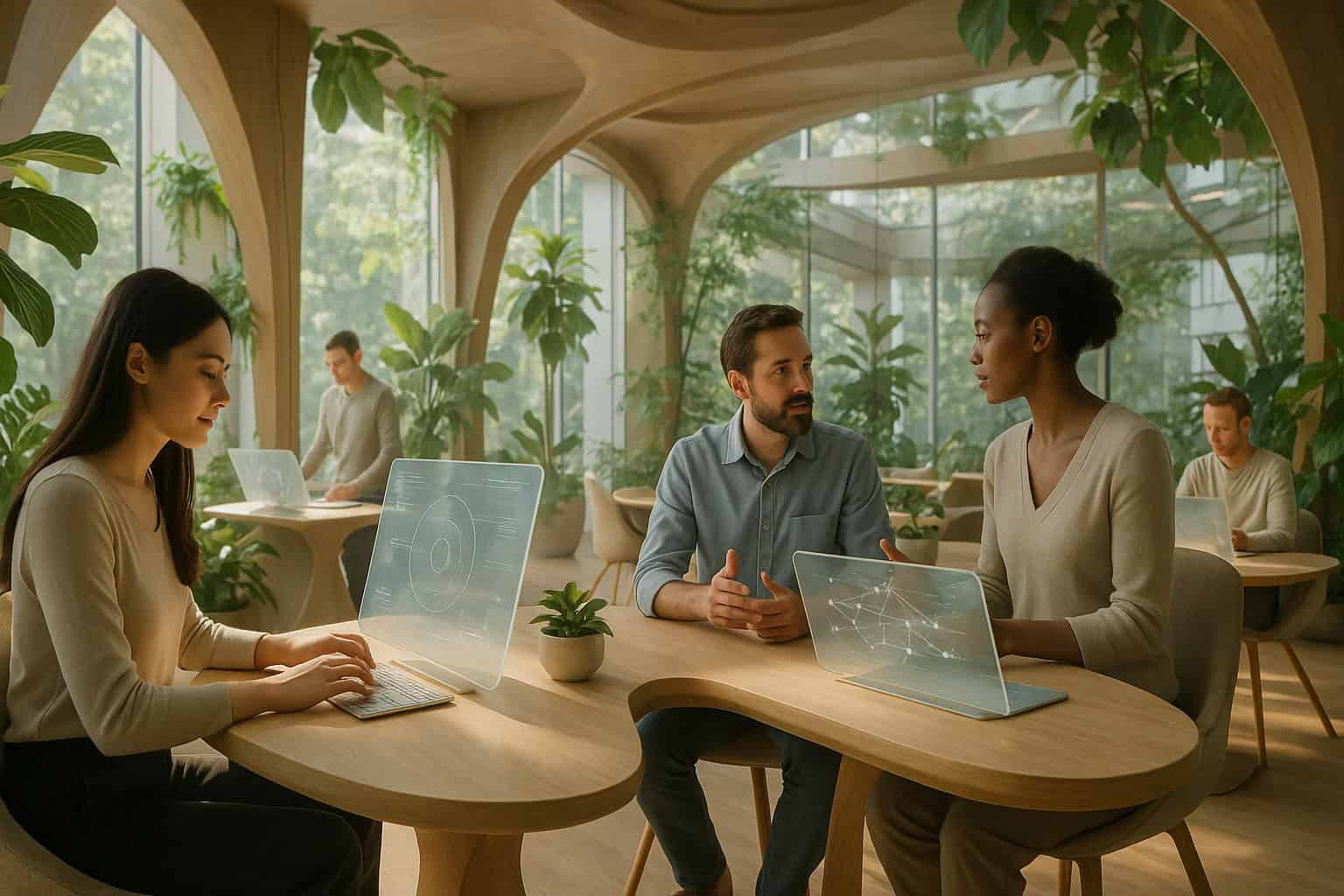
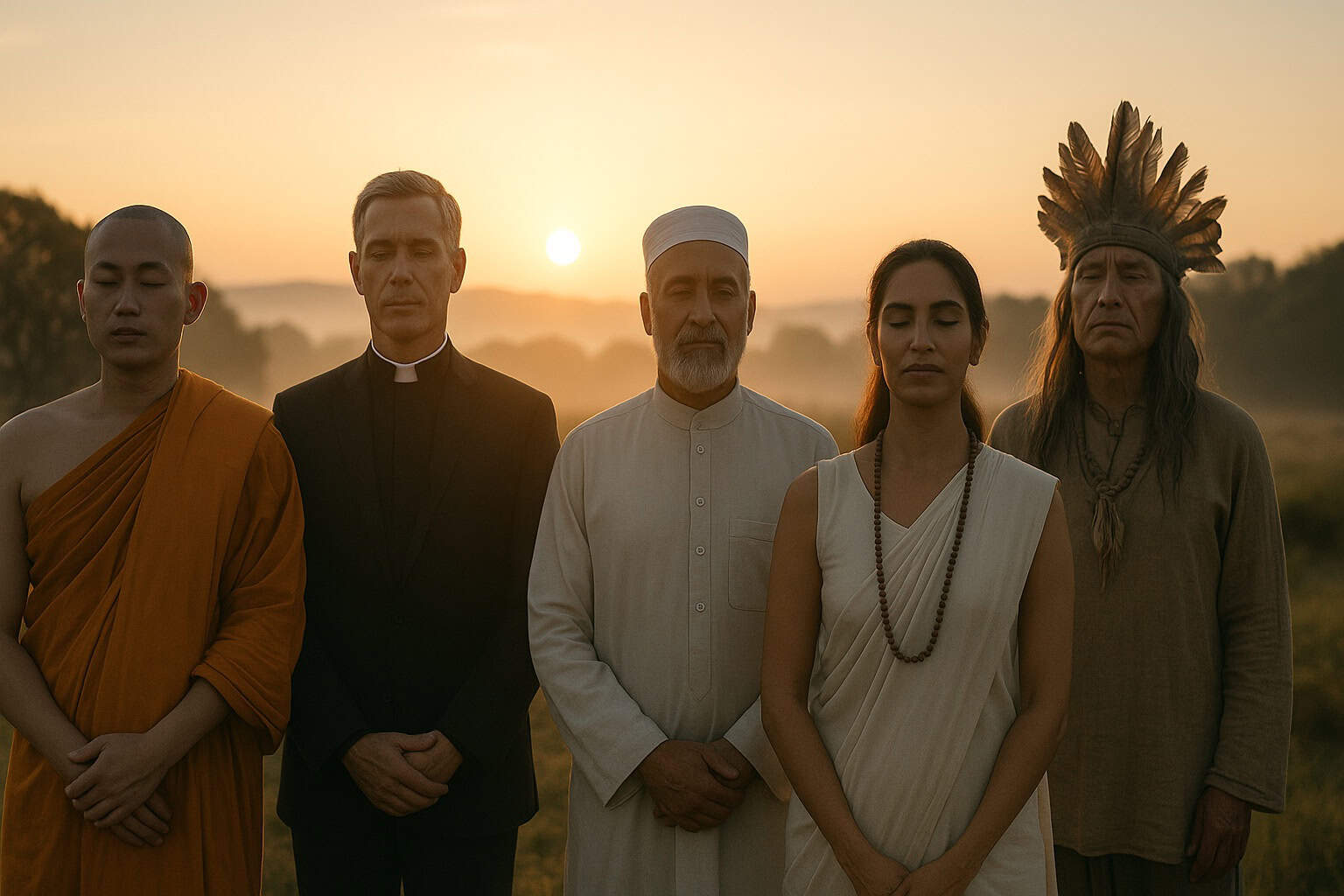
Education & Research – The Future According to the Guardians of Life
Educational projects and research initiatives designed to awaken collective consciousness, nourish scientific curiosity, and build knowledge in service of the Living.
From Education to a Living Learning Ecosystem: Connecting Schools, Families, Territories, and Nature
School can no longer be seen as a closed space, isolated from the rest of society. To prepare future generations for the challenges of the 21st century, education must become a node within a living ecosystem—connected to families, territories, and nature. This article explores how to transform education into a space of interconnection, cooperation, and purpose.
Institutional Barriers to a Living Pedagogy: Challenges, Resistance, and Strategies for Implementation
As more schools, teachers, and parents seek to integrate a pedagogy rooted in the Living, numerous forms of resistance emerge: rigid curricula, standardized evaluations, limited resources, cultural misunderstandings. This article analyzes these constraints and proposes concrete, step-by-step strategies to overcome them.
Measuring Educational Transformation: Indicators and Insights for a Living-Centered Pedagogy
As education transitions toward more cooperative, life-centered models, a key question arises: how do we evaluate these transformations? This article proposes qualitative and quantitative indicators and shares insights from schools that have already embarked on this journey.
The Theory of Evolutionary Consciousness: A Framework to Refound Human Society
What if consciousness—not natural selection alone—were the main driver of human evolution? This article introduces the foundations of the Theory of Evolutionary Consciousness and explores how it could reshape teaching, cooperation, and the structure of society. A vision that unites science, spirituality, and social commitment.
Embedding Nature Protection into Educational Curricula: An Imperative for the Future
As the planet faces major environmental crises, education has a decisive role to play. How can nature protection become a core component of school programs—not as a simple “chapter,” but as a guiding thread? This article offers concrete approaches to help children grow up with the awareness that nature is not a backdrop but a vital partner to protect.
Alternative Schools: Inspiring Examples for a New Educational Approach
In response to the limits of traditional education systems, alternative schools are flourishing worldwide. Active pedagogies, forest schools, cooperative classrooms, living-centered learning environments… This article presents inspiring examples that reinvent learning and illuminate a more human, more conscious educational future.
Intergenerational Education: Transmitting Consciousness and Collective Responsibility
In a world where generations increasingly live apart, intergenerational education creates a precious space for connection and reciprocity. This article explores how to rebuild bridges between children, adults, and elders to transmit memory, wisdom, and responsibility toward the Living—fostering harmony and continuity between generations.
Learning to Collaborate: Pedagogies Rooted in Cooperation and Unity
Traditional education has long emphasized competition and individual performance. Yet today’s challenges demand cooperation, listening, and collective intelligence. This article presents pedagogical approaches that place cooperation at the heart of learning, preparing generations capable of building together in unity.
Reinventing Education: Preparing Future Generations to Embrace a Common Vision
Education plays a central role in shaping tomorrow’s world. This article explores how to redesign educational systems so they do not merely produce individuals adapted to the labor market but conscious beings capable of carrying a common vision for humanity in service of the Living.
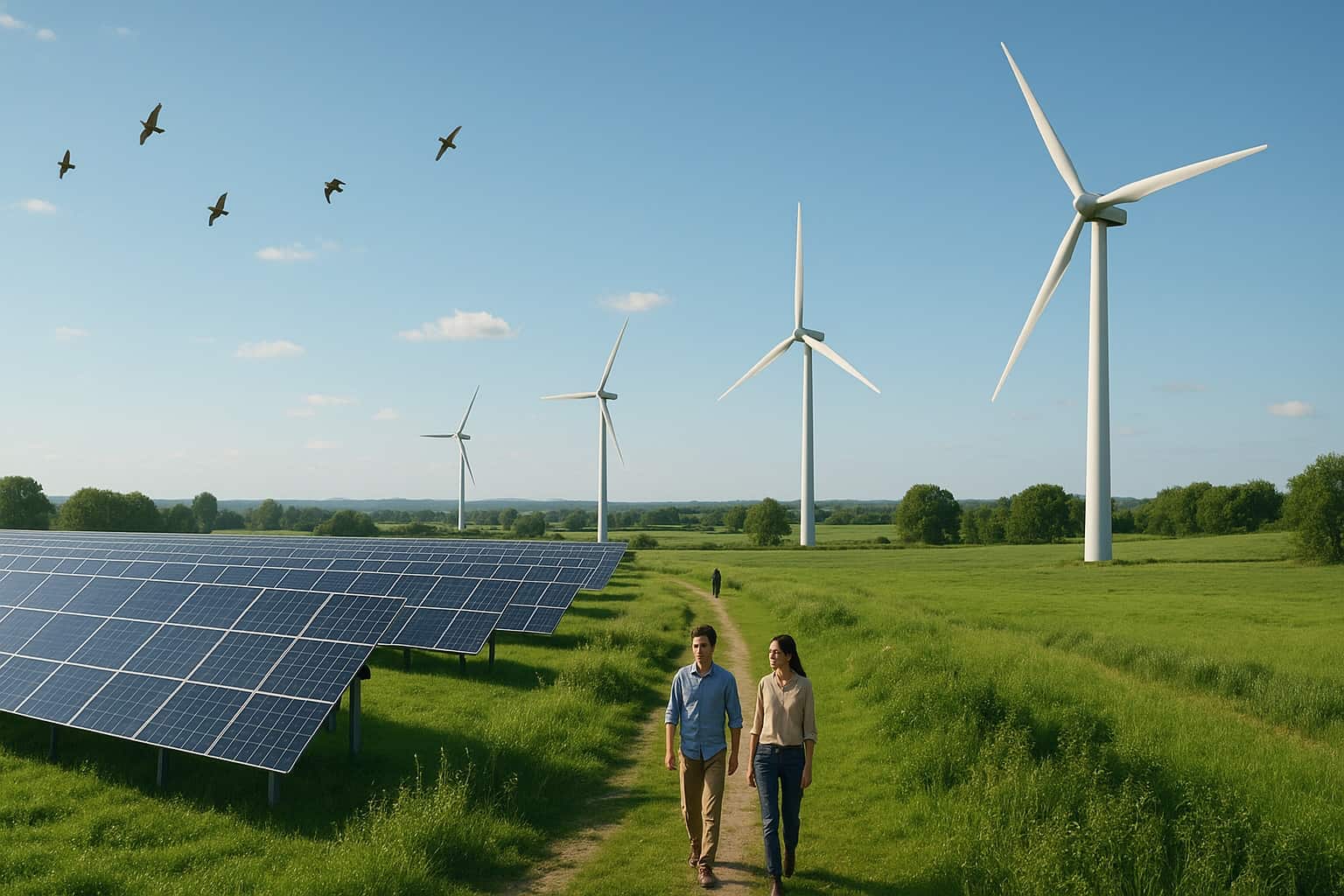
Energy & Environment – The Future According to the Guardians of Life
Balancing the use and regeneration of energy and natural resources to ensure long-term planetary harmony.
Climate Justice and Energy Equity: Building Resilient and Inclusive Societies
The energy transition is not just about technology, power plants, solar panels, or public policies. It raises a deeper question: how do we ensure that everyone, wherever they live, has access to fair, affordable, and sustainable energy? This article explores the stakes of climate justice and energy equity, showing how they can become levers of solidarity rather than sources of division.
Biodiversity, Living Soils, and Energy Cycles: How Ecosystems Support Humanity
When we talk about energy, we often think of electricity, gas, oil, or nuclear power. Yet the planet’s first “energy plants” are ecosystems: forests, living soils, oceans, wetlands. This article reveals how these natural systems generate, store, and regulate energy—and why protecting them is essential for humanity’s survival.
Renewable Energies and Collective Consciousness: Toward Human-Living Infrastructures
Renewable energies are often presented as a technical solution to the energy crisis. But they can be much more: a starting point for transforming our relationship with the Living. This article proposes viewing energy infrastructures as “human-living systems” designed to strengthen cooperation, responsibility, and collective consciousness.
The Earth–Human Balance: Living in Harmony with Planetary Cycles
For millennia, Earth has followed natural cycles—climatic, geological, biological—to which humanity has adapted. Today, our activities disrupt these cycles at unprecedented speed. This article explores how to restore balance between human needs and planetary rhythms in order to coexist sustainably within Earth’s limits.
Planetary Resources: Responsibility and Energy Equity
Every ray of sunlight, every drop of water, every cubic meter of fertile soil is a shared gift of the Earth. Yet access to these resources remains deeply unequal. This article questions how societies use and distribute natural and energy resources and proposes ways to treat energy as a common good managed responsibly and equitably.
Toward a Conscious Energy Transition
For decades, the energy transition has been approached primarily from technical and economic angles. But to be truly sustainable, it must also be a transition of consciousness. This article proposes a holistic approach in which energy choices align with values of respect, sobriety, solidarity, and responsibility toward the Living.
Energy as a Flow of Life: Understanding Natural Cycles
Humanity has long extracted, consumed, and transformed energy in various forms. But what is energy, if not the movement of life itself? This article invites readers to see energy as a flow connecting all beings and systems—from the Sun to ecosystems, from human communities to stellar cycles—and to rethink our use of energy in harmony with these cycles.
Territorial Resilience: Building Autonomous Communities in Times of Energy and Ecological Crisis
Our era is marked by multiple crises—climatic, energy-related, economic, and social. Territorial resilience is becoming a central issue. This article shows how local communities can build ecological and energy autonomy by relying on the Living and cooperation to withstand crises without fragmenting.
Finance & Economy – The Future According to the Guardians of Life
Analyses of the transition from a profit-centered economy to a model that reduces inequalities and builds a fairer, more sustainable society.
Regenerative Finance: Directing Capital Toward Life Rather Than Extraction
For decades, global finance has channeled capital toward resource extraction, speculation, and activities destructive to ecosystems and human communities. Regenerative finance proposes a radical shift: using money as a tool in service of life by supporting projects that restore soils, biodiversity, communities, and social bonds. This article explores the principles, tools, and concrete examples of this new approach.
Individualism Versus Solidarity: What Future for Modern Societies?
Modern societies oscillate between individualism—celebrating personal success and competition—and solidarity, which strengthens cohesion and collective resilience. This article examines the tensions between these forces and explains why a sustainable future requires reconciling individual autonomy with active solidarity serving the common good.
Sustainable Communities: Models that Embody Harmony and Collective Responsibility
Facing ecological and social challenges, many local communities are experimenting with ways of living that are simpler, more cooperative, and more respectful of the Living. Eco-villages, housing cooperatives, transition towns… This article presents inspiring models from around the world and shows how they illuminate the future of our societies.
The Impact of Unity on Social Cohesion: Case Studies from Around the World
Unity is often seen as abstract or idealistic. Yet when communities organize around a shared vision and a sense of belonging, the effects on social cohesion are concrete. Through international case studies, this article explores how unity enhances resilience, trust, and the capacity to act collectively.
The Place of Humans in the Future Economy: Toward a Human-Centered Model
Modern economies often reduce humans to “resources” or “production factors.” This article proposes reversing that logic by placing humans at the center—an economy that supports personal fulfillment, relational well-being, and respect for the Living. What would organizations, companies, and public policies look like if designed from this perspective?
The Circular Economy: A Pathway to Harmonize Growth and Sustainability
Since the industrial revolution, mainstream economic systems have relied on a linear model: extract, produce, consume, discard. The circular economy offers an alternative: designing systems where waste becomes resource, production cycles are inspired by the Living, and growth no longer comes at the planet’s expense. This article explores the foundations and concrete applications of this approach.
Redistributing Wealth: Innovative Solutions for Reducing Economic Inequality
Economic inequalities have reached critical levels, threatening social stability and democracy. This article explains the mechanisms behind wealth concentration and presents innovative solutions—reformed taxation, universal basic income, work-time redistribution, cooperative models—to better share resources and strengthen social justice.
Local Currencies: Tools to Boost Community Resilience
In a globalized world where financial flows often bypass local territories, local currencies are resurfacing as powerful tools to support real economies, short supply chains, and community cohesion. This article explores how local currencies work, their impacts on territories, and how they integrate into a more just and sustainable economic model.
From a Profit Economy to a Common-Good Economy: A Shift in Paradigm
Today’s economy centers heavily on profit, often at the expense of the planet and the most vulnerable populations. This article invites a paradigm shift: moving from an economy focused on individual accumulation to a common-good economy, where value is measured in contributions to the Living, social justice, and the future of coming generations.
Media & Communication – The Future According to the Guardians of Life
Crafting a unifying narrative of the Living through responsible media and conscious communication.
Radical Transparency and Ethical Communication: Rebuilding Trust in the Age of Misinformation
Trust is the primary currency of any living society. In an era of fake news, manipulation, and information overload, this trust is eroding. This article explores how radical transparency, combined with rigorous communication ethics, can rebuild bridges between citizens, institutions, and media.
Local Media, Community Networks, and Information Sovereignty: Acting at the Right Scale to Protect the Living
As information spreads at high speed through global platforms, local media and community networks play an essential role. This article analyzes how proximity-based media strengthen information sovereignty, support grounded narratives, and contribute to protecting the Living.
Transmedia Storytelling for a Unifying Vision of the Living: How to Share a Global Narrative that Engages the World
We live in a world where every individual navigates multiple formats—videos, podcasts, articles, social media, games, documentaries. Transmedia storytelling allows a coherent narrative to unfold across these mediums. This article shows how this approach can spread a unifying vision of the Living and engage diverse audiences in a shared journey.
AI, Media, and Collective Consciousness: Opportunity or Risk for a Shared Language?
Artificial intelligence increasingly shapes the creation, circulation, and prioritization of information. This article questions whether AI can become a tool for shared understanding and collective intelligence—or whether it risks intensifying information silos and division.
Art, Culture, and Storytelling as Vectors of Planetary Unity
Throughout history, humanity has used art and storytelling to convey myths, values, and worldviews. This article explores how contemporary culture and artistic expression can serve as powerful vectors of planetary unity—helping people recognize themselves within a shared story that reconciles humans with the Living.
Toward Responsible Communication: Ethics, Transparency, and Truth in a World Saturated with Images
Humanity has never produced as many images or visual contents as today. In this constant flow, communication ethics become crucial. This article proposes guidelines for responsible communication that seeks not to capture attention but to awaken consciousness—restoring truth, transparency, and respect for the Living.
Collective Intelligence Through Communication: Toward a Common Language for Humanity
In an era marked by fragmented discourse and polarized opinions, the emergence of a shared human language appears essential. This article explores how communication can foster collective intelligence, enabling individuals and communities to think, feel, and act together in service of the Living.
Media in Service of the Living: Rethinking the Role of Information in a Conscious Society
In a world saturated with content, information can fuel fear and division—or illuminate, connect, and inspire. This article invites us to rethink the role of media in a conscious society, where every piece of content contributes to understanding the Living, strengthening solidarity, and supporting collective responsibility.
Art as a Vector of Unity and Collective Expression
Art transcends linguistic, cultural, and social boundaries. It expresses the inexpressible and unites people around shared emotions and visions. This article shows how art can become a vector of unity and a space for collective expression—strengthening humanity’s sense of belonging to the Whole.
Politics & Governance – The Future According to the Guardians of Life
Exploring new forms of governance rooted in a shared vision, collective responsibility, and unity in diversity.
Power, Leadership, and Ethics: Making Decisions Beyond Partisanship to Address Planetary Urgency
The world is undergoing multiple crises that transcend borders and partisan interests. This article explores what ethical and responsible leadership could look like—leadership capable of rising above political divisions to address climate, social, and democratic emergencies.
Regenerating Democracy: Participation, Transparency, and Accountability as Pillars of a New Social Contract
Modern democracy has brought major progress, yet shows signs of fatigue: abstention, distrust, growing feelings of powerlessness. This article proposes ways to regenerate democracy through citizen participation, greater transparency, and shared responsibility between elected officials and citizens.
Multi-Level Governance: Linking Local, National, and Global Scales for a Civilization of the Living
Governance is often seen as the domain of states or international institutions. Yet many solutions emerge at the local level. This article explores how connecting local, national, and global governance can build coherent systems capable of protecting the Living and humanity as a Whole.
The Collective Living Contract: A Universal Vision with an Initial Implementation in France
Nations today face the challenge of reconciling environmental protection, social justice, and economic stability. The Collective Living Contract offers a universal framework that can be adapted by each country. This article presents its main principles and how an initial implementation could take shape in France.
Visionary Leaders for a United World: Portraits and Lessons from Great Political Figures
History has seen leaders who placed the common good above personal or partisan interests. This article presents portraits of political figures who embodied unity and collective responsibility—and draws lessons for leaders of today and tomorrow.
Balancing Individual Freedoms and the Common Good: Contemporary Political Challenges
One of the major challenges of our time is reconciling individual freedoms with the need to act for the common good—particularly in response to ecological and social crises. This article explores tensions, risks of misuse, and pathways to policies that respect individual rights while guiding societies in a shared direction.
Ecological Policies in the Face of the Climate Crisis: A Responsibility Shared by All
The climate crisis is now measurable, documented, indisputable. Yet political responses remain scattered or insufficient. This article highlights the scale of shared responsibility among states, companies, and citizens, and presents ambitious ecological policies already implemented in several countries.
A Common Vision as the Driver of Political Decisions: An Example for the 21st Century
In the face of multiple global crises, piecemeal political decisions are no longer enough. This article explores the idea of a shared vision—at the scale of a nation, a continent, or humanity—as the guiding force behind political choices, shaping laws, budgets, and priorities over the long term.
Policies for Global Unity: Toward a Governance Model Based on Collective Responsibility
In a world shaped by global crises, the idea of global governance is both debated and misunderstood. This article explores what policies for global unity could look like—based not on domination but on collective responsibility, solidarity, and planetary consciousness.
Health & Biology – The Future According to the Guardians of Life
Understanding life as a Whole, where human health depends on biological balance and respect for all forms of life.
Living Systems and Holistic Medicine: Reconnecting Biology, Mind, and Ecosystem
Modern medicine has achieved extraordinary progress, yet often fragments its understanding of the Living: body on one side, mind on another, environment elsewhere. This article proposes a holistic vision reconnecting these dimensions—showing that human health cannot be separated from biology, mind, or the ecosystem.
Internal and External Ecology: The Exposome as the Foundation of Human Health
Medicine has long focused on internal factors—genes, biology, lifestyle—to explain health outcomes. The exposome broadens this view by integrating the totality of environmental exposures. This article explores how this unified perspective reveals that human and planetary health are inseparable.
Regenerative Aging: Toward a Biology of Extended Life and Conscious Maturity
Aging is both a biological mystery and a societal challenge. Rather than fighting age, regenerative aging aims to support the body’s innate capacities for repair and renewal. This article explores how science, medicine, and consciousness can converge to foster longer, healthier, and more meaningful lives.
Microbiome, Environment, and Integral Health: The Living Link Between Earth, Body, and Consciousness
We have long believed that health was an individual matter. Yet the microbiome—microorganisms living in and around us—reminds us that we are deeply interconnected with the Living world. This article shows how the microbiome links Earth, body, and consciousness, revealing the profound unity of human and ecological health.
Prevention, Nutrition, and Nature: Returning to the Essentials of the Living
Modern medicine often intervenes only after disease has manifested. Yet traditions and contemporary research alike emphasize prevention, living nutrition, and connection to nature. This article invites a return to the essentials of the Living: breathing, moving, eating simply, and reconnecting with the Earth.
Biomedical Innovations in Service of Life
Recent decades have brought remarkable biomedical advancements—personalized medicine, gene therapies, biotechnologies. But these innovations are not neutral. This article examines the conditions under which technology can genuinely serve life while respecting human dignity, ecological balance, and future generations.
Technology & Computing – The Future According to the Guardians of Life
Putting artificial intelligence, data, and quantum physics at the service of the Living and of meaningful innovation.
Immersive Technologies (VR/AR) and Collective Consciousness: Transforming Perception to Elevate Humanity
Virtual reality (VR) and augmented reality (AR) transform how we perceive the world. They can isolate or distract—but they can also open new spaces for learning, cooperation, and healing. This article explores how immersive technologies can elevate collective consciousness and strengthen humanity’s connection to the Living.
Conscious Cybersecurity: Protecting Humans and the Living in the Digital Space
We have built an interconnected world where much of our life flows through digital systems. Cybersecurity is no longer only about protecting data—it is also about protecting human rights, dignity, and the Living within an essential space of civilization. This article proposes an expanded, conscious approach to cybersecurity.
Biomimicry, Nature-Inspired Technologies, and Organic Computing: Toward Symbiosis Between Humanity and the Living
Technology is often perceived as opposed to nature. Yet biomimicry shows that innovation can be inspired by the Living—more resilient, efficient, and harmonious. This article explores the potential of nature-inspired technologies and organic computing to foster symbiosis between humanity and ecosystems.
Blockchain, Web3, and Digital Sovereignty: Foundations for Transparent and Collective Governance
The digital world is undergoing major restructuring through new architectures—blockchain, Web3, decentralized systems. This article examines how these tools can enhance collective digital sovereignty, transparency, and participation in managing data and shared resources.
The Ecological Footprint of Digital Technology: Toward Sustainable and Earth-Aligned Infrastructure
Digital technology seems immaterial—floating in “clouds,” appearing on screens. Yet its ecological impact is substantial: data centers, energy consumption, mining of rare metals. This article proposes ways to redesign digital infrastructure so it aligns with Earth’s limits and cycles.
Artificial Intelligence and the Ethics of the Living: Building Conscious and Responsible Systems
We are living through a major transformation as artificial intelligence enters all sectors of society. This article examines how AI can support unity, responsibility, and collective evolution—rather than domination or fragmentation—if designed with an ethic centered on the Living.
Green Technologies and Sustainable Innovation
Technology is one of the main engines of change—for better or for worse. This article highlights innovations that reduce ecological impact, restore ecosystems, and put technology in service of the Living rather than domination.
The Impact of Social Networks on Collective Consciousness: From Misinformation to Co-Inspiration
Never before has humanity been able to connect so quickly and massively. This article analyzes how social networks can either amplify misinformation and polarization—or become catalysts for co-inspiration and collective intelligence.
The Role of Emerging Technologies in Building Social Unity
Emerging technologies are often associated with division or distraction. Yet they can also enhance social unity. This article shows how, when guided by a shared vision, technologies can help societies function as an interconnected Whole serving the common good.
Interreligious – The Future According to the Guardians of Life
Dialogues between religions to reveal the shared essence of the Living, transcend divisions of faith, and build a unifying vision in service of life.
Silence, Contemplation, and Nature: A Universal Spiritual Pathway Toward the Living
Before words, there was silence. Before doctrines, there was experience. This article explores how silence, contemplation, and connection with nature form a universal spiritual pathway—beyond religions—allowing each person to reconnect with the Living in its simplicity and depth.
Shared Moralities: How Major Religious Traditions Provide the Foundations of a Universal Ecological Ethic
Throughout history, religions have often been viewed as sources of division. Yet they share common values: respect for life, compassion, responsibility toward creation. This article shows how these shared moral foundations can serve a universal ecological ethic.
Earth Rituals: Religious Symbolism and Ecological Commitments Across Cultures
Since ancient times, humans have developed rituals linked to the Earth—harvest festivals, seasonal rites, ceremonies of gratitude. This article explores how these spiritual and religious rituals can be revalued as ecological commitments in service of the Living.
Universal Gratitude: A Practice Shared Across Traditions to Honor Earth and the Living
Gratitude is one of the simplest and deepest spiritual gestures. Present in many religions, it invites recognition of the value of life, Earth’s gifts, and the bonds that unite us. This article shows how gratitude can become a bridge between believers and non-believers.
Building Bridges Between Believers, Agnostics, and Non-Believers: Toward Universal Mutual Understanding
In a world where beliefs often create tension or misunderstanding, building bridges between those who believe, doubt, or do not believe becomes essential. This article proposes approaches for peaceful dialogue based on respect, curiosity, and the awareness that we all belong to the same Living Whole.
The Role of Sacred Texts in Human Unity: Cross-Readings for a Shared Vision
For millennia, sacred texts have inspired billions. Yet they have sometimes been used to justify division. This article proposes cross-readings of major religious traditions to reveal a shared vision of unity and human responsibility toward the Living.
Spirituality and Consciousness: Exploring the Link Between Faith and the Protection of Nature
Across cultures, nature has long been seen as a place of spiritual revelation—mountains, forests, waters, deserts. This article explores the profound connection between spirituality, consciousness, and the protection of nature, showing how faith can become a force to honor and preserve life.
Interreligious Dialogues: Local and Global Initiatives for Harmony and Collective Responsibility
Despite the prominence of religious conflict in global narratives, numerous initiatives quietly foster dialogue, peace, and cooperation between traditions. This article presents examples of interreligious dialogues that strengthen harmony and collective responsibility toward the Living.
Unity in Diversity: How Different Religious Traditions Can Converge Toward a Shared Vision
Religions are often seen as competing frameworks, each claiming truth. This article invites a shift in perspective: viewing religions as multiple paths toward a single underlying reality—the unified Living. It explores how these paths can converge toward a shared vision serving the Whole.
F.A.Q.
Frequently asked questions about the Guardians’ vision
What is the universal wave? How can I take part? Find clear answers to the most essential questions about our collective mission.
Guardians of Life is a global initiative that promotes a shared vision for humanity: to protect, honor, and preserve consciousness, the shared essence of nature and life. The project includes a book, a comic strip, and a platform for the exchange of ideas, designed to inspire a united and responsible society.
Our mission is to unite humanity around a common vision: the recognition that we are part of a Whole, a universal wave that crosses and unites all life. This awareness leads us to the responsibility to protect and honor life in all its forms, contributing to a balanced and sustainable civilization.
In a world fragmented by divergent interests and conflicts, Guardians of Life proposes a unifying direction, based on harmony and collective responsibility. This vision offers an alternative to current paradigms, inspiring collaboration instead of competition and unity instead of division.
The initiative was founded by Lionel Mallecourt, along with a community of people who share the same vision. The project is supported by people from various fields – science, art, education and entrepreneurship – who contribute to spreading and implementing this vision in real life.
Unity: Humanity is a Whole and needs a common vision to evolve.
Responsibility: Each individual plays a role in protecting and developing universal consciousness.
Harmony: Individual freedom and collective responsibility must coexist in balance.
Respect for life: Nature and consciousness are essential and must be protected and honored.
Evolution: Humanity must adapt and grow in a conscious and balanced way.
Being a “Life Guardian” means recognizing that life is interconnected and that each of us has a responsibility to evolved nature and consciousness. A Life Guardian acts with respect, balance, and vision, contributing to the protection, honor, and harmonious development of life in all its forms.
FAQ – Understanding the Vision of the Guardians of Life
The Frequently Asked Questions of the Guardians of Life were created to provide clear, accessible and meaningful answers to the most common questions about the vision, the books, the graphic novel, the mission of the project, and the scientific, philosophical and spiritual foundations that support it. This FAQ is designed to guide every person, regardless of culture, belief, or life path.
The purpose of this FAQ is not to convince, but to clarify. It explains essential concepts such as the unity of humanity, the role of consciousness, collective responsibility, the stellar cycle, and the idea of “evolved life.” It also outlines the objectives of the project: building a shared vision accessible to all, inspiring social harmony, proposing a new form of societal organisation, and helping each person find their place within the Whole.
The answers are structured to connect science, philosophy, spirituality, and the human experience. They show how the proposed vision does not oppose any existing belief system but instead brings them together around a universal value: the preservation and elevation of life. The FAQ also clarifies the pedagogical intention of the project, the purpose of the books, the usefulness of the graphic novel, and the role of the Virtual Guardian.
Through this FAQ, everyone can explore major questions such as: Who are we? Why are we here? How can we evolve together? How do we protect life? How do we build a shared future? Each answer is an invitation to reflect, to feel, and to take part in the collective journey toward unity.
The FAQ guides readers in their process of awakening and understanding. It offers a space for progressive discovery, without judgment, dogma, or unnecessary complexity. It allows each person to advance step by step into the vision, in alignment with their own sensitivity.
Whether a visitor comes with scientific, spiritual, political or personal questions, the FAQ highlights one essential truth: we are part of a Whole, and together, we can build a harmonious civilisation grounded in responsibility, knowledge, and the preservation of life.
Theory of Evolving Consciousness – Foundation of Guardians of Life
The Theory of Evolving Consciousness offers a unified understanding of life, humanity, and evolution. It is based on a central idea: human evolution is not merely biological or technological—it is above all conscious. Consciousness is not a secondary phenomenon but a force of organization, coherence, and transformation. It shapes societies, guides behaviours, and structures all living systems.
According to this theory, humanity forms a single Whole: a collective organism animated by the same fundamental consciousness, expressed through the diversity of individuals, cultures, and beliefs. Human divisions—political, religious, or economic—are not intrinsic realities but mental constructions that obscure the underlying unity of life. As consciousness evolves, these divisions fade, opening the way to a civilization founded on unity, responsibility, and harmony.
The theory also states that human beings are not separate from nature. Humanity is one of the most advanced expressions of nature’s evolution. Protecting nature therefore means protecting consciousness itself. From this perspective, the future of humanity depends on its ability to recognize this interdependence and to act collectively to preserve the conditions for harmonious evolution.
The Theory of Evolving Consciousness provides a scientific, philosophical, and spiritual framework for the vision of the Guardians of Life. It allows the many transformations—educational, political, economic, or technological—to be aligned around a single principle: elevating consciousness so humanity can act as one unified and responsible Whole.
Collective Contract of Life – Framework for Societal Transformation
The Collective Contract of Life is a proposal for global transformation designed to align human society with a foundational principle: protecting life, honouring consciousness, and acting collectively as a unified civilization. It represents the practical, political, social, and economic application of the vision of the Guardians of Life.
This contract rests on a central idea: every human structure—state, economy, institutions, enterprises, and technologies—must be evaluated according to its ability to preserve and regenerate life. It proposes a new balance between individual freedoms, collective responsibility, and a shared vision. The goal is to move beyond destructive competition and build a model based on cooperation, social justice, ecological resilience, and harmony among peoples.
Its core principles include: the unity of humanity as an indivisible Whole; the recognition of consciousness as a driver of evolution; intergenerational responsibility; alignment between political decisions and planetary limits; institutional transparency; and citizen participation in shaping collective choices.
The Collective Contract of Life also provides concrete tools: intelligent ecological taxation, conscious energy transition, education oriented towards life, multi-level governance, regenerative economy, and the strengthening of solidarity and the common good. It offers an initial architecture for building a civilization capable of navigating natural and stellar cycles without fragmentation.
It is a universal framework that can be adapted by any nation, inviting humanity to become once again the guardian of life and an active participant in shaping its future.
Contribution & Call – Participating in Our Shared Evolution
The Contribution / Call section invites every person to take part in the great work of the Guardians of Life: the construction of a conscious, unified civilization aligned with the cycles of nature and the evolution of the living. It expresses a simple truth: this project belongs to no one, and at the same time, it belongs to everyone. It is not a closed movement, but an open space where each contribution, no matter how small, nourishes the evolution of the Whole.
This call is grounded in a fundamental belief: the future of humanity is a collective creation. The books, the graphic novel, the website, the Virtual Guardian, and all the free resources available here are not commercial products but tools placed at the service of awareness, unity, and shared understanding. Anyone may choose to support this project according to their heart, their means, and their inner resonance.
Contributing does not only mean offering financial support. It can mean: – sharing the vision with others, – offering time, skills, or ideas, – helping with translation or dissemination, – participating in collective dialogue, – or simply living the values of the Guardians of Life in one’s daily life. Every gesture matters. Every intention strengthens the common field we are building together.
This section also affirms a universal principle: access to knowledge must remain free and open to all. The digital books, the graphic novel, the educational resources, and all online content are made accessible without cost, so that no individual is excluded. Voluntary contributions help sustain the project: printing the books, maintaining the website, creating educational tools, translating materials, and enabling global outreach.
This call is also an expression of deep gratitude — gratitude toward all those who are already participating: readers, teachers, creators, scientists, believers and non-believers, children, elders, and citizens around the world who support this emerging movement of consciousness. Each person brings a unique light that, together with others, helps illuminate a path toward the future.
Finally, the call is an invitation: If this vision resonates with you… if it awakens something within you… if it inspires you… then you are already a Guardian of Life. Contributing simply means responding to that resonance — adding your voice, your energy, and your presence to the collective transformation now unfolding.
Humanity moves forward when we rise together. And this project, humble and determined, has a single purpose: to help bring forth a future where harmony between human beings, nature, and consciousness becomes the new normal.